Health Resource Digest is a newsletter produced by the Integrative Pain Healers Alliance- a private professional network of pain and injury healers who contribute original articles, Op-ed features, product reviews and videos about current topics relating to their specific area of study.
To heal from chronic
conditions, it is essential to approach the gut-brain axis as an integral
system.Some of us don’t know that most
of the symptoms we suffer can be reversed by resetting our gut.Brain fog, fatigue, mental health issues,
mood swings, inflammation, short-term memory loss, neurodegenerative diseases,
and cognition can result from an imbalance in our gut microbiome (gut
bacteria).
The two-way biochemical communication that takes place
between the gastrointestinal tract and the central nervous system, the
gut-brain axis (GBA), is influenced by microbiota.For example, during a stressful event or
exciting short-term event one might experience cramping, nausea, or even
diarrhea.
This second brain (our gut), composed by immune, endocrine,
and neuronal components, will alert when an imbalance (dysbiosis) in the gut
microbiome has been identified.Constant
microbiota fluctuations change our gastro intestinal terrain, and influence our
judgment and well-being.For example,
when our good bacteria are out of proportion with the bad bacteria in our gut,
there is no production of anti-inflammatory antioxidants to help the body get
over trauma.Thus, bad bacteria begin to
flourish, releasing toxins and increasing inflammatory responses in our body
which can circulate back through our blood and back to our brains.
Consequent gastrointestinal dysbiosis results in chronic
inflammation that leads to brain degeneration.
CONTRIBUTOR: LESLIE VALLE, MD - Founder of Biomed Life/ Santa Barbara Longevity Center After medical school, Dr. Valle focused on managing chronic disease starting with its links to poor nutrition and then introducing them into the world of energy frequencies. She explores and includes non-invasive modalities such as: frequency therapies (including biofeedback), PEMF, proper detoxification, nutritional guidance and binaural beats as needed. - visit: www.biomedlifesb.com
MENTAL ISSUES FROM POST CONCUSSIVE DISORDER
Pre-existing mental conditions make the diagnosis and treatment more delicate. The underlying condition can challenge the client and healthcare provider to meticulously investigate the efficacy of each component of testing and treatment choices, timing, and tolerance. Certain preexisting mental health conditions can be characterized by similar dysfunctions caused by brain injury. On the side of treatment, some of those same conditions and understanding response to treatment can vary, fostering inaccurate expectations when it comes to recovery time. Another issue is the possibility of medications side effects that can also be similar to symptoms of a concussion, adding complication to the prognosis or discharge. Lastly, the availability of treatment choices can be greatly limited as some can be contraindicated- perhaps due to an abundance of precautions affecting clinical decision making.
Part 1 of this Brain-Gut Connection was launched by Dr. Michael Gruttadauria's review on sports related concussions and his findings that link the health condition of the GUT with the symptomatology of the head impact injury (see part 1). To continue, imaging diagnostic specialist Dr. Robert Bard concurs with Dr. Gruttadauria's science by presenting current expanded studies on this very connection. This is recorded by the use of non-invasive imaging called elastography as well as the 3D doppler blood flow ultrasound. Recognizing the holistic and integrative physiology that comprises our very wellness confirms the link between latency symptoms of past concussions and other culprits to related illnesses that are prompted by metabolic reactions and biological data including antigens, antibodies, electrolytes, enzymes, inhibitors etc.
GUT IN HEALTH
By: Dr. Robert L. Bard
The intestinal system is now recognized as a major factor in the immune system. New ultrasound imaging advances allow imaging of the gut wall layers, internal vasculature and areas of inflammation and post inflammatory fibrosis with structure formation. High resolution probes visualize the various segments of digestion for scar formation and the shear wave elastography quantifies the degree of fibrosis. This exam may be performed endoscopically or by transabdominal probes depending on the location of the organ and type of pathologic process. Certain areas, such as the appendix, are quickly evaluated for appendicitis with high accuracy on CT studies.
Other organs like the pancreas are examined with endoscopic MRI for silent cancers. Inflammatory markers of active disease are studied with Doppler flow hemodynamics including 3D measurements of the inflammatory arteries attacking the swollen bowel wall. Disease such as Crohn’s disease, irritable bowel syndrome (IBS) and diverticulitis are accompanied by an influx of feeding vessels. The more arterial flow in the affected area signifies the likelihood of greater bowel infection leading to exterior wall adhesions which may obstruct or strangulate adjacent healthy small bowel loops. Fistulae, abscess and cancers may be observed with real time sonographic evaluation in quick non invasive scanning sessions.
ELASTOGRAPHY: ADVANCING ULTRASOUND TO SCAN THE GUT:
Developed in Europe and Japan 20 years ago sonography of the GI tract was slow to be adopted in the US. As of 2 years ago, only one center in New York City was performing outpatient elastography for colitis, IBS and Crohn’s disorder. There are many levels of sophistication in Doppler flow imaging as well as elasticity measurement and the clinical subtype will guide the probe application. Wide usage in cancer detection of the thyroid, breast, prostate and skin has made screening popular worldwide. Often a biopsy will be avoided by a negative elastogram report. Cancers are hard and inflammation is soft which are readily observable endpoints on elastographic studies. Elastography is applicable to examining the pediatric brain as sound easily penetrates the younger skull tissue.
ON POST-CONCUSSION SYMPTOMS
The underreported of bowel permeability to toxins in concussion is likewise mostly anecdotal. The possibility of scanning the gut for increased blood flow following brain trauma may be easily performed as followed as a guideline for evaluation of concussion chronicity. As the bowel activity is regulated by the autonomic nervous system we may apply the same diagnostic endpoints as other physiologic norms. The response of the microvasculature in the retina provides a functional guideline as to the progression of brain trauma and concussion as measured by blood flow. The application of optical devices and sensors for physical (temperature, respiration, heart rate, blood pressure) chemical (pH, pO2, glucose, lipids, oximetry) and biological (antigens, antibodies, electrolytes, enzymes, inhibitors, metabolites, proteins) data with imaging (endoscopy, optical tomography, confocal microscopy) adds new classifications of metabolism in the altered state. The addition of wearable sensors and portable laser powered LED tools currently used by athletes are applicable to non invasive monitoring of the effect on the body by concussion indirectly. Surrogate markers are widely used such as analyzing the white blood cells to verify the infection is bacterial rather than viral. Similarly, there exists alternate options with high accuracy to move forward the immediate and long term effects of concussive injury.
Copyright Notice: The materials provided on this website/web-based article are copyrighted and the intellectual property of the publishers/producers (The NY Cancer Resource Alliance/IntermediaWorx inc. and The AngioFoundation). It is provided publicly strictly for informational purposes within non-commercial use and not for purposes of resale, distribution, public display or performance. Unless otherwise indicated on this web based page, sharing, re-posting, re-publishing of this work is strictly prohibited without due permission from the publishers. Also, certain content may be licensed from third-parties. The licenses for some of this Content may contain additional terms. When such Content licenses contain additional terms, we will make these terms available to you on those pages (which his incorporated herein by reference).The publishers/producers of this site and its contents such as videos, graphics, text, and other materials published are not intended to be a substitute for professional medical advice, diagnosis, or treatment. For any questions you may have regarding a medical condition, please always seek the advice of your physician or a qualified health provider. Do not postpone or disregard any professional medical advice over something you may have seen or read on this website. If you think you may have a medical emergency, call your doctor or 9-1-1 immediately. This website does not support, endorse or recommend any specific products, tests, physicians, procedures, treatment opinions or other information that may be mentioned on this site. Referencing any content or information seen or published in this website or shared by other visitors of this website is solely at your own risk. The publishers/producers of this Internet web site reserves the right, at its sole discretion, to modify, disable access to, or discontinue, temporarily or permanently, all or any part of this Internet web site or any information contained thereon without liability or notice to you.
Disclaimer: The information (including, but not limited to text, graphics, images and other material) contained in this article is for informational purposes only. No material on this site is intended to be a substitute for professional medical advice or scientific claims. Furthermore, any/all contributors (both medical and non-medical) featured in this article are presenting only ANECDOTAL findings pertaining to the effects and performance of the products/technologies being reviewed - and are not offering clinical data or medical recommendations in any way. Always seek the advice of your physician or other qualified health care provider with any questions you may have regarding a medical condition or treatment and before undertaking a new health care regimen, never disregard professional medical advice or delay in seeking it because of something you read on this page, article, blog or website.
This video is a segment of the 2022 BRAIN HEALTH Educational Series published at the IPHA/Health & Healing 101 Report. The program presents interviews about Post Concussive Syndrome from health professionals and advocates detailing the diagnostic protocols for acute and chronic sports related injuries plus an overview on the current findings about mental disorders associated with head trauma.
Most
people believe that you need to be knocked unconscious to have a concussion- and
that's just not the case.Even a “small” impact
injury, what they call mild traumatic brain injury or mild concussion affects
thousands and thousands of people every month. From falls accidents, sports, assaults-- many
different things can cause concussions.
Something called POST-CONCUSSIVE SYNDROME can happen from these
mild traumatic brain injuries that may appear to resolve themselves. As far as
the symptoms go, most people end up with headaches, blurry vision, dizziness or
lightheadedness. After about a week, these symptoms tend to usually go away.
But up to 30% of people have persistent symptoms. And those persistent concussion
symptoms can be the same things like headaches and dizziness, but it actually
can progress into anxiety and depression and changes in personality and so on.
This is really when we need to get involved.
The traditional recommendation and prevailing wisdom for a
long time was actually to just take it easy, stay in a dark room and rest--
don't do anything exertional and stay off the computer. Don't watch too much TV
and your brain will just heal. Lately,
we find that this is no longer the case. You may want have physiological rest,
but then what you really want to do is have ACTIVE rest, which is allowing the
brain to work- pushing the brain to work.
There are physiological changes that go on in the brain
when you have a trauma. When you have this initial injury (and depending on the
extent of the blow to the head), you have changes in the micro environment
within the brain. You also can have an actual bruise. You can have changes in
blood vessel diameter. You can have torn blood vessels. With concussion, most
of these things are invisible. MRI and
CT scans are usually negative- and patients are usually sent home from the ER
and told to rest.No follow ups are
assigned from this point, and this is where we need to do better.
Once we get this clear diagnosis that you had a
concussion, we need further studies and objective findings such as continued
diagnostic imaging. Where the standard imaging protocols of today often leaves
people to their own devices, what they don't realize is that this blow to
the head causes changes that actually can affect them for the rest of their
lives. Quite often I'll have people
who come to see me with anxiety or depression or Dysautonomia or migraine
headaches, and upon my consultation with them, I would find that they had a
history of being hit in the head years ago- but was not diagnosed with
concussion then. They do not realize that something like this blow to the head
that didn't really seem to be so overwhelming at the time can actually change
so many things about their life down the road.
HEAD IMPACT IN SPORTS
With high impact sports like boxing and football and
soccer, where you have repetitive blows to the head, there are studies that are
actually show that repetitive concussive forces can actually be additive. You
can have an additive effect. It doesn't have to be one giant impact where you
might see a wide receiver going over the middle and catching a soccer ball.
Getting violently laid out by a linebacker may not even be
as bad as the offensive and defensive linemen that are banging their heads
against each other for 60 plays a game, per se. We we're all differently
susceptible to concussion. Somebody could have what would appear to be a more
minor concussion and have greater symptoms for a longer period of time, as
opposed to a really significant concussion.
SYMPTOMATOLOGY:
The GUT-BRAIN CONNECTION
I had a 32 year old former professional hockey player see
me for ongoing symptoms that he related back to the multiple concussions that
he sustained from a game. He had been traveling around the world and had access
to the top doctors. Over time, he contracted persistent headaches, balance
problems and dizziness that really began affecting his life. It actually forced
him out of hockey.
Between his hockey career and his present life, he
self-medicated the compounded set of problems that just weren't going away. These
symptoms are never really looked at objectively because many physicians are not
necessarily equipped to look too deep for dysfunctions, diseases or damage this
complex. The patient ended up having a chronic gastrointestinal problem as well
as an inner ear problem. And these two things are more functional in nature. These
would not appear in an MRI or a CT Scan.What we realized was that the GUT-BRAIN CONNECTION was so powerful. When
we put him on an anti-inflammatory diet and we did eye-based and balance-based
rehabilitation within two months, all of his symptoms disappeared.
We know that within 12 hours of having a concussion, you
end up with a leaky blood brain barrier. And as a result, the, the same
proteins and the same chemistry that holds the blood brain barrier together
also holds together another barrier- the intestinal lining. So if you have an
inflammatory diet and many of these young athletes do (they don't eat so well) all
of a sudden you have foods like gluten and dairy and sugar and alcohol that we
know to be inflammatory in nature. They are now easily passed through the
gastrointestinal, lining into the bloodstream and are able to cross into the
blood brain barrier. And now what we end up was a chronic inflammatory
irritation of the brain. That's really more chemical than it is as a result of
the initial trauma. And if we don't work on fixing the gastrointestinal
dysfunction, the brain trauma never truly resolves. (see expanded article on Brain-Gut connection by Dr. Robert L. Bard)
In other patients, we look at the neurology, the
biochemistry, the inflammation, the gut and the microbiome.By fixing the microbiome and changing their
diet, experience has shown that all of their concussion symptoms go away. So if
we're not looking at the gastrointestinal system, we're literally missing 50%
of the problem.
FROM THE LAB: RESEARCH ON CONCUSSION IMAGING
10/1/2022- In collaboration the Bard Diagnostic Imaging (NYC), diagnostic imaging specialists, neurologists and neuropsychologists are now in the process of assembling a comprehensive set of mutli-modality diagnostic protocols and specific physiological scan points for the study of POST-CONCUSSIVE SYNDROME. This review covers the establishment of imaging base line studies and a formal analysis of hemodynamics that offer quantifiable evidence from non-invasive modalities.
One of the primary studies is the use of ultrasound technologies including the Transcranial Doppler for the Basilar Artery, the Extracranial Doppler for the Temporal Artery and the Transorbital Doppler for the ophthalmic and central retinal vessels. These areas of the head provide essential blood flow readings for the detection of abnormality from latent effects of potential impact.
“Looking at the arterial-venous ratio and getting baseline is a great tool. Then, doing functional neuro interventions to enhance frontal lobe function (like cerebellar stimulation with complex upper body movements or specific vestibular canal stimulation) can create changes in the AV ratio and show positive correlation with symptom reduction”, states Dr. Mike Gruttadauria in an earlier interview.
Dr. Robert Bard explains his prime strategy for scanning with ultrasound. "We need to position the probe to the lower/back of head- where the basilar
artery is available. This blood vessel supplies oxygen-rich blood to areas of
the brain and the autonomic/central nervous system. Next, we position the TCD probe to the temporal region, where temporal
artery is available. This is located just anterior to the ear, and is a guideline that
is used by most practitioners to examine blood flow to the brain &
measurement of cardiac cycle. We identify the heart rate or the pulse also
shows that the extracranial blood flow is intact as it goes towards the eye. Afterwards, we position a LINEAR probe to the OPTIC REGION- specifically to
study the optic nerve to show the paucity of the vessels in the central retinal
artery and choroidal vessels."
Clinical Spotlight: Concussion Management
10/16/2022- In a recent collaborative study of sports-related brain injuries, Dr. Alex Gometz (NYC) Founder Concussion Management of New York recently joined Dr. Robert Bard to conduct an investigative study about new imaging protocols recording pathologies of brain trauma. During this study, Dr. Gometz shared his clinical insights on concussion management with The Integrative Pain Healers Alliance (IPHA).
Meet Dr. Alex Gometz: Review on Athletic & Pediatric Concussion
Dr. Gometz' practice is focused on the diagnostics and management of concussion in the athletic population and the pediatric community. During an exclusive interview, he reflected on the current guidelines covering patient analysis and the heavy pressure on professional athletes to return to play. "Obviously the league and fans want players to play. (I feel that) they need to have clearer guidelines based on better facts for the sake of the well-being of the player. I find that the current protocols may not be adequate, given the new research that shows recovery time may take longer. Studies show that protocols should be more sensitive to each player’s individual vulnerabilities. This is new research that should be taken into consideration and used to adapt the current protocols".
As an avid student of therapeutic advancements, Dr. Gometz is committed to staying on top of the latest clinical innovations and treatment modalities. On the care of MSK issues, regenerative therapies like PRP & EXOSOMES as well as non-invasive energy treatments like SHOCKWAVE, PEMF (Electromagnetic Field therapy), COLD LASER among others are well established in the market. But due to the fast paced progress of this industry, Dr. Gometz finds that not all practitioners are able to keep up with the latest innovations - especially when it comes to technologies that offer new ground in the resolution of concussion symptoms.
Disclaimer & Copyright Notice: The materials provided on this website/web-based article are copyrighted 2022 and the intellectual property of the publishers/producers (The NY Cancer Resource Alliance/IntermediaWorx inc and the AngioFoundation (501c3). It is provided publicly strictly for informational purposes within non-commercial use and not for purposes of resale, distribution, public display or performance. Unless otherwise indicated on this web based page, sharing, re-posting, re-publishing of this work is strictly prohibited without due permission from the publishers.Also, certain content may be licensed from third-parties. The licenses for some of this content may contain additional terms. When such Content licenses contain additional terms, we will make these terms available to you on those pages (which his incorporated herein by reference). This feature content and the digital platforms this resides in does not support, endorse or recommend any specific products, tests, physicians, procedures, treatment opinions or other information that may be mentioned on this site. Referencing any content or information seen, published or shared by other individuals is solely at your own risk. The publishers/producers of this article reserves the right, at its sole discretion, to modify, disable access to, or discontinue, temporarily or permanently, all or any part of this Internet web site or any information contained thereon without liability or notice to you.
EXPLORING A NEW HOPE IN WELLNESS & BRAIN HEALTH Written by Josh Schueller, PT / Edited by: Graciella Davi
As a practicing Physical Therapist, I adhere to the philosophy of 'treating the whole person'. This means that when a patient undergoes some form of therapy, it is common to uncover a variety of facets to their injury or condition. The term “PHYSICAL therapy” can sometimes be conflicting as it suggests that the therapist only looks at the physical aspects. Many injuries are comprised of multiple layers and all of them need to be considered to restore normal functions.
Sufferers of ACL injuries (as an example) recover physically long before they are confident to run, jump, or cut without reservations. People who suffer injuries in a car accident may have a psychological component that ultimately limits full recovery. Traditional Physical Therapy does not usually have the means or time to focus diagnosing or treating the emotional or psychological components that can lead to chronic pain or dysfunction. This can lead to people suffering for years with chronic pain despite being healed physically.
I recently received a demo model for reviewing of a wearable device marketed as a brain fitness app and meditation aid (called BrainTap®). According to its literature and white papers, the engineers employ a confluence of BINAURAL BEATS, ISOCHRONIC TONES, HOLOGRAPHIC MUSIC and RED/BLUE LIGHT to affect the user’s focus, enhance sleep, and improve mental health. Through a “symphony of brainwave activity”, the various physical reactions lead to holistic healing, improved learning and productivity. The audio guide describes benefits like improved balance to the alpha (relaxed, intuitive and creative), beta (awake and alert), delta (deep sleep and recovery), gamma (peak concentration and cognition) and theta (healing).
BREAKDOWN OF THE ACTIVE FUNCTIONS Based on my experience with this device, I took apart the featured integrated effects that make up this meditational program.
1. BINAURAL BEATS: essentially, it’s a form of sound wave therapy. It has two varying frequencies, one in each ear. The brain identifies the difference between the two and the science of this apparently leads you to experience a deep relaxed state.
2. GUIDED VISUALIZATION: Imagine getting a coach to train you on how to see with your mind, and to lift yourself into a positive mode. During the period of relaxation, the narrator/guide (Dr. Patrick Porter, the developer) helps you contemplate and explore the kind of mental images that helps you transcend ‘away from your current self’. I recognize the theory that visualization can improve mental, physical, sports performance, and even assist in body healing. Therapists use this tool with their patients often as a way to help them imagine an idea to manifest into reality.
3. 10-CYCLE HOLOGRAPHIC MUSIC- the quality headphones produces a 360 degree sound environment. This allows the visualization to become real in your mind creating an improved learning state.
4. ISOCHRONIC TONES- This is comprised of equal intensity pulses of sound separated by intervals of silence. Upon review, these tones are often used in other relaxation products because it is easy for the brain to follow.
5. LIGHT THERAPY- the device delivers light pulses that travel through the retina and ear medians. This sends direct signal to the brain. This concept appears in other energy therapies and has been recognized to increase serotonin and endorphin levels, linked to the improvement of mood, positive outlook and optimistic thinking.
FIRST IMPRESSIONS There are a variety of wearable devices on the market to help you relax, clear your mind- and even sleep better. I took on the BrainTap review for several weeks and started assessing a random list of programs that the app offers. These where guided meditation that can take you through different modalities. The headset and visor deliver light therapy while the soothing, “Barry White-quality voice” brings you through the entire catalog of programs including sleep improvement, life mastery, weight wellness, optimal health, stress free-me, paleo lifestyle and many more. Each category one more inviting than the next.
In the middle of a work day, relaxing your mind takes effort. Perhaps by the very act of scheduling a specific part of my day to do this helped me adjust more easily. Unlike many headphones that are flimsy and not fitting right, I appreciated the solid weight of the unit because this felt substantial to firmly hug my head, eyes and ears and place me into that zone. The headset and visor are surprisingly comfortable and easy to wear. With the right sounds in my ears, I am able to create the proper environment, let it be improving your focus, your retention or relaxation. Once the program is chosen, you can relax as Dr. Porter takes you on your journey. I have taken on the advice of various YouTube testimonials who advise lying down in a relaxed physical position for best results. Each session takes around 20 minutes or so. Having listened to this uniquely composed music, the different beats and frequencies inspire thoughts and reactions throughout. It truly is a journey that brings up a visceral response.
I assess the experience like going through two different layers of consciousness and relaxation. As you travel through your mind, you become focused on one thing- which is the concentrated relaxation while your brain has a chance to wander through different parts of your inner self. That is not something we can usually do throughout our work day when we're surrounded by computers and phone calls.
RECOGNIZABLE EFFECTS / BEFORE & AFTER STUDY
The overall experience left me relaxed initially as I used the preliminary programs. Once the focus shifted to specific groups, I noticed some differences in outcomes. Because this is geared as personalized wellness, I chose to use the device during the afternoons when I normally experience the “hitting the wall “period of the day. I often start the use of the device (BEFORE) when I am distracted (too much on my mind), losing focus and decreased concentration- what I consider to align with poor mental performance. AFTER completing a session, I find myself to feel refreshed, focused, and relived of stress. Initially, the light through the visor was distracting but as my brain synchronized, I acclimated within a few uses and hardly notice it.
I observed that each BrainTap session is comprised of 3 phases: - Initial relaxation- where the tension leaves your body - Deep, relaxed sleep - Focused and precise concentration
The time spent in the deep relaxed sleep decreases and the focused awareness increased the more sessions I completed. Overall, my sessions appear to affect the mind-body connection positively. Logic (and everything we know about personal balance and wellness) dictates that when the mind and body are not connected, increased stress and poor focus can occur. I can only imagine this is the sound logic that Dr. Porter pursued in his blueprints.
EPILOGUE: The health of our mind can be a leading factor in our life. In my experience if you do not have proper brain synchronization your workout can be torpedoed before it even begins. This is the same with work. Other sessions including ‘weight wellness’ also provided surprising effects. I found myself to go several hours into the evening without craving food. The more sessions I completed, the more benefits I recognized. Over the last several weeks, I logged improvements in sleep, concentration and decreased stress and found the changes to be significant, noticeable and consistent.
This device review has been as much a positive experience about the technology, as it has been a profound reflection on our human condition. As many people spend endless hours on social media and media in general, the connection between mind and body suffers. The negativity and doomsday predictions can leave someone “uncalibrated”. This imbalance can increase stress and cause the body to suffer (pain). If the body is out of equilibrium, it becomes more susceptible to sickness, pain, and dysfunction. This BrainTap device may actually hold the answer (or at least a portion of it) in synchronizing the brain into a calibrated state. When the mind and body gets in sync, healing and recovery becomes possible. As the health and wellness model evolves, having the capability to promote brain and body health becomes vital to obtaining optimal results.
Disclaimer: "MEDTECH REVIEWS" is a publishing program presenting a non-commercial, non-official user review of portable health-related technologies on the market. Our reviews are not intended as a marketing program for any device(s) featured in this article or video for evaluation. It is not a replacement for an official medical device review process for regulatory standards. This presentation is for informational use only and does not offer any direct medical claims whatsoever. Statements from all contributing speakers herein are expressing their own personal unscripted views as ANECDOTAL and they do not reflect those of our producers/publishers. Always seek the advice of your physician or other qualified health care provider with any questions you may have regarding a medical condition or treatment.
EVALUATION OVERVIEW: MULTI-MODALITY DEVICE TEST DRIVE / USER REACTIONS & IMAGING SCANS Level 1 & 2 Case Study: Physiological Effects & Ultrasound Imaging
8/1/2022- This device reviewed shall undergo a Level 1 study (observational evaluation, biometric analysis from clinical imaging) of a device promoted as a portable relaxation and wearable meditation technology. Commercially branded as BrainTap®, the device is designed to “address high stress, difficulty sleeping, low energy, and other lifestyle challenges”. By this, our evaluation partnership between members of IPHA (Integrative Pain Healers Alliance) and the Bard Diagnostic Imaging Center (NYC) joined to test drive/demo this and other technologies under a multi-modality review project as outlined below.
a. Evaluation on meditation effects on the body b. Assessment and comments on the device's components (as stated in its user literature) - binaural beats, isochronic tones, holographic music - red and blue light / frequency therapy c. Evaluation of the theories behind the device's design. Discussion on the variety of ways of boosting brain levels of serotonin, beta-endorphins and norepinephrine (as per the mentions of this device in social media, from other users blogs, literature and videos)
2)BEFORE & AFTER STUDY: To evaluate the effects of said device, Dr. Robert Bard co-designed the study strategy behind this Phase 1 review with evaluators including Jessica Glynn, LCSW. The review is an academic exercise in workflow analysis, comprised of a 9-point review from an unofficial personal study (not to be confused with a clinical trial or medical review), this report explains the possible means of gathering data averages from a limited number of subjects using medical-grade diagnostic modalities. The logic behind this review dictates collecting a BEFORE AND AFTER of scans and vitals for comparison, possibly linking the user's reaction(s) to the device.
* BEFORE (BASELINE) studies include:
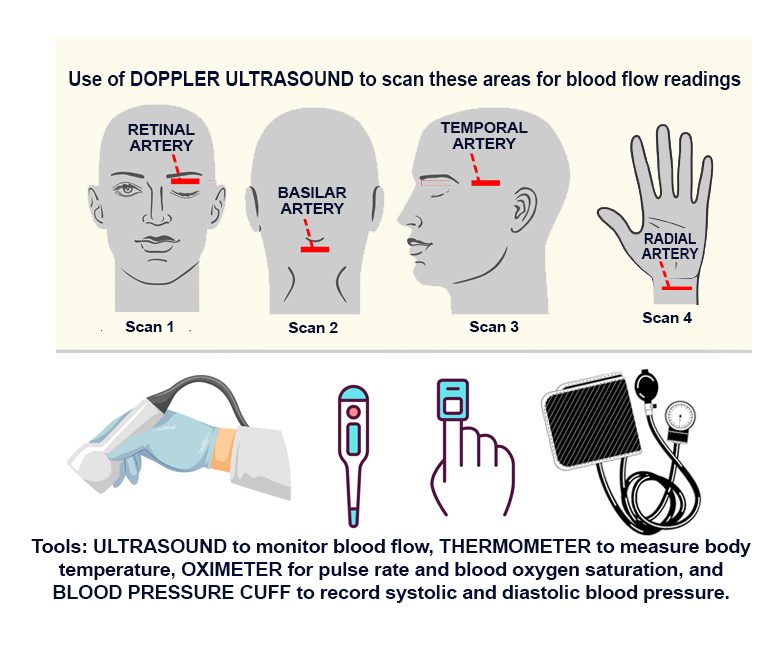
a.Preliminary exam of the subject's VITAL SIGNS: Recording includes: BLOOD PRESSURE, BODY TEMPERATURE, HEART RATE AND BLOOD/OXYGEN SATURATION. These are identified to show reactive effects when they body is placed in a meditative state.
b.Ultrasound scan of the BASILAR ARTERY located in the back of the head/brain. This blood vessel supplies oxygen-rich blood to areas of the brain and the autonomic/central nervous system.
c.Ultrasound scan of the EYE/RETINA, specifically to study the optic nerve to show the paucity of the vessels in the central retinal artery and choroidal vessels.
d.Ultrasound scan of the TEMPORAL ARTERY located just anterior to the ear, and is a guideline that is used by most practitioners to examine blood flow. This offers blood flow and blood velocity to the brain, but it also measures the cardiac cycle as well. Identifying the heart rate or the pulse also shows that the extracranial blood flow is intact as it goes towards the eye.
e.Ultrasound scan of the RADIAL ARTERY located along the forearm and accessible just proximal to the wrist: For non-radiologists using standard ultrasound or even pulse pressure with their fingers to measure the pulse, we have a way of quantifying the blood flow in major peripheral blood vessels.
f.Subject Interview/Survey: After the full exposure to the effects of binaural beats, the patient will provide any and all observed physical sensations and overall emotional changes that the meditational device experience may induce during the study.
***AFTER SCANS: repeat steps A-E
3)THEORIES AND OBJECTIVES: Report aims to identify any/all biometrics recorded through the use of standard medical equipment + then record AFTER effects of the relaxation device. The noninvasive diagnostic tools used in this study are selected based on their anticipated ability to collect physiological data while offering a comparative assessment of any therapeutics or response from outside stimulation.
4)SELECTED AREAS SCANNED WITH ULTRASOUND: Autoregulation of the circulatory system is controlled by several homeostatic mechanisms including the autonomic nervous system, which is believed to be a mechanism by which meditation alters cardiovascular function. As such, evaluating blood vessel flow and function aligns with studying the body’s effects under a meditative state. According to Dr. Robert Bard, the areas of the body scanned with ultrasound are key areas that have the highest probability of response and reaction from a device that claims to promote bringing the subject into a meditative state. The chosen target scan areas (Basilar Artery, Eye/Optic Nerve, Temporal Artery and Radial Artery) are identified as key zones for hemodynamic study, showing the most effective areas for studying blood flow.
CASE STUDY #1- DIRECT OBSERVATIONAL
By: Jessica Connell, LCSW / Evaluation partner 1 (Conducted product test drive part 1)
Jessica Connell is one of the evaluating partners at MEDTECH REVIEWS/ brain health division. She is IPHA's chief mental health advisor, an LCSW (licensed clinical social worker) and is the CEO of a psychotherapy and coaching practice (Confident Minds, LLC).
"As a therapist, the most important thing is to dig deeper for the thoughts that affect my clients’ behaviors. I opted to evaluate a device like this because of its intended design to bring the user into a relaxed and a guided meditative state. To review its components of slowing down any levels of anxiety is important to being able to do my type of work. Working with Dr. Bard's scanning technologies is a remarkable way to identify physiological response and effects of any treatment solution. His assessment helps us recognize what this type of technology is doing to us on that clinical stage. This is important because devices is a consumer product that promotes self-care without any medical intervention. In the case of this device review, we want to know how this is helping actually us- our brain, our circulation and our neurological system. Exploration of this device alongside our testing team brings great confidence in its safety as well as its intended effects."
Since inception, the acceptance of non-invasive imaging for surgical guidance, monitoring pathology or screening has been a game-changer in just about every area of medicine. Dr. Robert L. Bard (cancer radiologist and diagnostic imaging specialist) co-founded and publishes a non-commercial program undergoing performance reviews of select technologies called "MedTech Reviews" under the JOURNAL FOR MODERN HEALING. This is a public newsletter where he shares his clinical expertise in diagnostic interpretation / analyses. He provides this review to both the general public and the medical community as part of an educational initiative to encourage beta testing, strategic efficacy review protocols and the value of analytical confirmation, second opinions and use of non-invasive imaging. His 'Tech Reviews' reports on the immediate physiological effects of any medical/health related device (either validating or confirming its intended effects) with ultrasound and other non-invasive scanning methods. All results are based on a BEFORE-AND-AFTER visual comparison and a clinical interpretive description of the imaging graphic - thus aiming to show the body's potential reaction to that device (if any) by virtue of an after-treatment applied scan.
1. BASILAR ARTERY SCAN: The scan of the BASILAR AREA (in the back of the head) requires a transcranial Doppler probe using 125 MHz frequency to investigate the optic tract. This is associated with the vision in the back of the brain and is imaged through the Foramen Magnum- which is the opening at the base of the skull that enables visualization of the posterior area of the brain.
The depth of penetration is 5cm, and we notice at 3cm, there's a blue color with a short left arm that's red and a larger right arm that is orange. The short colored arms are the left and right vertebral artery, which are flowing towards the transducer, which is why they are a red color, meaning forward flow. The blue is the midline Basilar artery, which supplies the entire posterior cerebral circulation and is blue colored because the blood flow is going away from the examining probe.
The theory behind scanning this area shows that the visual center of the brain can be imaged in its vascular perfusion and blood velocity flow with the standard transcranial Doppler technologies. Also, ultrasound of the posterior fossa is important because the Basilar artery or Basler venous system (also in the back) are a cause of acute stroke and mental confusion when they are involved. So the ability to image these structures in minutes gives you a quick stroke protocol to rule out a certain type of insufficiency syndrome that causes either paralysis or massive confusion and is curable in minutes. If the source is correctly identified in a timely manner.
2. OPTICAL SCAN (Scan Fig 2A): Retinal Scan- BEFORE (Scanner 1: Zonare) This is a high resolution, 20 MHz scan of the retina, the optic nerve and the feeding arteries and veins. The white back of the image shows a tube-like dark structure, which is the optic nerve. Within the optic nerve is a central blue colored vessel that is the central retinal artery. On these sides surrounding it are the choroidal arteries, which form a semicircle around the posterior retina. On the left image, some of those blood vessels image the short posterior ciliary arteries, which are amongst the smallest in the body and the most susceptible to disease in certain neurologic or degenerative diseases. This means we have a way of measuring not only blood flow to the eyes such as in stroke or hemorrhage, but also predict the effect of high blood pressure or sickle cell disease or severe neurodegenerative disease like multiple sclerosis or ALS by imaging the impact and change on the extremely sensitive and very tiny posterior choroidal vasculature.
* EYE SCAN BEFORE (Scan Fig 2B): The importance of doing the high resolution retinal image is because this standard anterior transcranial Doppler scan shows the paucity of the vessels in the central retinal artery and choroidal vessels. We basically see a few low intensity arteries which are measured quantitatively in the bottom graph, showing a red line, which goes up to 25 cm/sec - as a baseline measurement. This is a retinal scan away from the optic disc or center of the eye showing that the perfusion in the choroidal vessels is symmetric without evidence of aneurysm or hypertension or stroke. Hence, we are confirming what the ophthalmologist sees when he dilates the eye to look for the hypertensive changes of atherosclerosis in the retinal arteries or micro aneurysms and micro hemorrhages from diabetes. This way, if somebody has visual problems related to a neurodegenerative disease, which is not high blood pressure or unrelated to diabetes, we have a way of ruling those serious medical complications as a rule out. Moreover, it is less likely to be high blood pressure, heart disease or diabetes that's causing the degeneration and more likely to be a progressive disease like Parkinson's or Alzheimer's disease.
* EYE SCAN AFTER(Fig 2C): The use of the brain tap stimulation technology, the effect in the anterior orbit retinal and optic nerve vessels appears to show gross evidence of a profusion of greater arterial and venous flows. This is accompanied by some dilatation of the central ophthalmic artery, as well as the short posterior ciliary arterial system. We used the standard transcranial Doppler probe which sees a few increase in the retinal vessels. This is very minimal compared to the focused high resolution and magnified retinal imaging at a much higher frequency. Compared to the BASE LINE SCANS (pre-treatment examination) where the average blood flow was approximately 10 to 15 cm/sec, in this case, post stimulation of the autonomic nervous system has resulted in a recognizable increase in flow of (avg) 26 cm/sec. As the treatment on the autonomic nervous system proceeds, the pulse rate and blood flow (velocity) is expected to decline because of the decreased arterial and venous resistance. So the fact that the arteries are less stressed or less constricted means that you'll have more blood flow into a region that's treated with a foreign influence, or a diseased area of the body.
On a side note about eye-safety evaluations of ultrasound use, the latest 2022 publication on eye safety and ultrasound, the use of approved Doppler ultrasound instruments is within the safety guidelines of the American Institute of ultrasound in medicine and the American radiologic society. Hence, This is a safe procedure with the modern technology used for eye scanning and commercial ultrasound units today.
3. TEMPORAL ARTERY SCAN
* BEFORE: The previous images were of the intra-orbital, which is part of the anterior intracranial circulation. Now in the extracranial circulation, which comes from the carotid artery system (which feeds both the internal and external systems), the superficial temporal artery, just anterior to the ear is a guideline that is used by most practitioners to examine blood flow. Hence, this is the pulse that you can feel with the finger used to measure biofeedback effects is measured with the doppler spectral blood flow on the chart, showing you a peak systolic velocity of 11.71 cm/sec. This gives you not only the blood flow and blood velocity, but it also measures the cardiac cycle as well. Identifying the heart rate or the pulse also shows that the extracranial blood flow is intact as it goes towards the eye. This is a frequent area of inflammatory disease or arteritis, which is plaguing the older population in migraine headaches and in diseases like temporal arteritis, which causes visual loss and severe headaches.
Temporal arteritis causing non-specific eye symptoms or headaches has been characteristically diagnosed by first CT and MRI, and then by biopsy. The resolution of the ultrasound systems we use today is sufficient to show the arteritis as a soft tissue mass in circling and constricting the temporal artery causing both the pain spasm and erratic blood flow to the eye. In many countries today, the absence of a ring sign constricting the temporal artery is proof positive that a biopsy (where you cut part of the temporal artery out) is unnecessary. Hence, we're using this instead of microscopy and instead of surgery, and instead, we are imaging the whole pathology if present with the new high resolution ultrasound techniques.
* AFTER - Note: This process indicates significant and measurable response in blood flow. A standard resolution probe should suffice to identify effect or reaction.
Comparing from the baseline temporal scan (11 cm/sec during pretreatment), the quantifiable blood flow peak velocity after treatment has increased to over 15 cm/sec. This identifies recognizable impact of the energy treatment on the relaxation of the arterial system to increase flow. This is a biofeedback effect causing the stress in the arterial system to relax, thus measurably and quantitatively slowing the pulse and increasing the blood flow at the same time. This is also an area where clinicians and natural healers with alternative treatments use to measure the pulse. This gives you a visual and quantifiable look at what the treatment is actually doing (to the body). Instead of a pressure on the pulse, which is hardly measurable from 11-15 cm/sec, we can visually monitor and present a better report to any clinician. This also helps support the patient's peace of mind that the treatment actually is showing verifiable results.
4. RADIAL ARTERY: Another pulse reading that biofeedback and energy therapists commonly use is through the radial artery. Comparatively, this scan identifies the radial artery to be much larger than the temporal artery (being approximately 2mm in width), whereas the temporal is 1mm or less in width. This corresponds to the fact that you can measure both the blood flow in and around the head and in the distal parts of the body- to the musculoskeletal system. This scan could also help us search for other stress related diseases, such as carpal tunnel syndrome or osteoarthritis in the hands.
For non-radiologists using standard ultrasound or even pulse pressure with their fingers to measure the pulse, we have a way of quantifying the blood flow in major vessels. Since we're looking for a refined way of detecting earlier treatment effect, we go to the smaller blood vessels as in the soft tissues of the temporal area (which are one half the diameter) and then verifying the same with the more sensitive and micro circulation of the retinal and posterior ciliary arteries system. In other words, using the tiniest arteries available to you, you can measure the treatment effect more quickly.
Disclaimer: MEDTECH REVIEWS* is a non-commercial user review of health-related technologies and is not intended as a marketing program for any device(s) featured in this video for evaluation. This presentation is for informational use only does not offer any direct medical claims whatsoever. Statements from all speakers herein are expressing their own unscripted views that do not reflect those of our producers. Always seek the advice of your physician or other qualified health care provider with any questions you may have regarding a medical condition or treatment.
PRODUCT TESTERS REPORTS & REVIEWS: BrainTap®
The MedTech Review team is comprised of clinical professionals who are dedicated to TEST DRIVING non-invasive technologies to provide their personal observations, evaluation and insight on its performance and potential benefits. While their articles are offered as supportive reviews as consumer/user advocates, all tech reviews provided by them are not offered as official medical data.
PRIMER: "HEALING, STRESS AND THE PARASYMPATHETIC SYSTEM"
By: ROBERTA KLINE, MD- The core of any health product test drive is to confirm how it directly affects the user. This comprehensive primer details the body's relationship to STRESS. Dr. Kline presents a clear and insightful overview of WELLNESS by confirming the body’s interconnected systems (ie. circulatory, cardiovascular, nervous, lymphatic, endocrine etc). She identifies the many touch points for stimulation and helps us gain a more profound understanding about the strategy behind this health‐tech review. Learn about the basis for identifying biometrics and the various effects that comprise the device’s actual influences on the mind and body with (Review complete Primer report)
REPORTER 1: JESSICA CONNELL, LCSW(Taking on the Mental Health Perspective) I am excited to review this (BrainTap®) and all other brain optimizing/relaxation devices for the benefit of supporting the patient community. We established a strategy of doing a BEFORE & AFTER comparison of my biometrics to first make sure everything works safely. My goal was to (first) record that this device actually beings you into a meditative state- but the major test was to identify how MEDITATION actually works on the body. I wanted to observe my body's metrics if it in fact shows results that align with the body's calm and relaxation. (see Jessica's complete review)
USE OF QUANTITATIVE IMAGING
ROBERT L. BARD, MD(Ultrasound Diagnostic Specialist / med-tech evaluator) partnered with Jessica Connell to explore the effects of this BrainTap®- starting with a baseline of her vitals, then providing the use of 3D ultrasound scans of parts of her brain. This included her blood pressure, her body temperature and blood-oxidation levels. As part of this baseline (or the "BEFORE" portion of the exam) we then proceeded to do scans of eye, the side of the brain and the back of her head using various medical grade ultrasound devices where he could see my arteries and measurable blood flow. We collected all this data from her current physiology to create a means of comparing how her body would react to the device.
REPORTER #2: LESLIE VALLE, MD (A Clinical Assessment on Binaural Beats) Most people have two underlying health issues as a common denominator, sleep deprivation and stress management. Sometimes this comes hand-in-hand with one another. If we allow it to control our lives, stress can become a silent killer. This is why as an initial consultation I make sure I get an analysis of everyone's heart rate variability (HRV). I prefer to have a measurement of function and dysfunction before I read patients complaints and concerns, so I can scientifically show patients their levels of stress, sleep health and brainwave patterns. The majority of the population firmly believes stress is present in their day-to-day life but never plays a dominant role. I’ve had patients tell me they are not that much stressed - just “normal” stress. Until I show them their own HRV analysis, at that point they have acknowledged they adapted to their level of stress and they believe it's normal. (See Dr. Valle's complete reviews)
REPORTER #3: JOSH SCHUELLER, PT - Exploring New Hope in Wellness & Brain Health. "As a practicing Physical Therapist, I adhere to the philosophy of 'treating the whole person'. This means that when a patient undergoes some form of therapy, it is common to uncover a variety of facets to their injury or condition. The term “PHYSICAL therapy” can sometimes be conflicting as it suggests that the therapist only looks at the physical aspects. Many injuries are comprised of multiple layers and all of them need to be considered to restore normal functions. " (See Josh's complete review)
*This spotlight segment is part of IPHA MedTech News' innovators feature series.
EVALUATION SET (PART 2):
A CLINICIAN'S ASSESSMENT ON BINAURAL BEATS By: Dr. Leslie Valle | Edited by: Roberta Kline, MD
Most people have two underlying health issues as a common denominator, sleep deprivation and stress management. Sometimes this comes hand-in-hand with one another. If we allow it to control our lives, stress can become a silent killer. This is why as an initial consultation I make sure I get an analysis of everyone's heart rate variability (HRV). I prefer to have a measurement of function and dysfunction before I read patients complaints and concerns, so I can scientifically show patients their levels of stress, sleep health and brainwave patterns. The majority of the population firmly believes stress is present in their day-to-day life but never plays a dominant role. I’ve had patients tell me they are not that much stressed - just “normal” stress. Until I show them their own HRV analysis, at that point they have acknowledged they adapted to their level of stress and they believe it's normal. (click to visit Dr. Valle's observational reviews)
INTEGRATING NON-INVASIVE TECHNOLOGIES Years ago, I learned about biofeedback and electromagnetic field therapy. The market was robust with choices, but something called ONDAMED® won me over- largely due to the functional health strategy by design, indicating a heavy focus on a whole-body care. It combined the diagnostic abilities of biofeedback science to "communicate with the body" to monitor conditions and imbalances. Then the intuitive energy healing aspect comes in the form of its PEMF element (pulsed electromagnetic field) to 're-balance' the body or support the body to repair itself painlessly and non-invasively. Treating patients showed many positive results including tissue stimulation for pain relief in soft tissue injuries and wound healing. Next, patients would tell me about having difficulty with reducing their stress. I was introduced to BINAURAL BEATS therapy, an auditory illusion perceived when two different pure- tones, separated in frequency by only a few Hertz, one in each ear - the brain is left with a unique third tone. Many claim that binaural beats can induce a meditative state more quickly and is said to: manage/reduce anxiety, improve focus and concentration, support positive moods and even help with pain management. (see complete feature)
CREDITS
¡ Lennard M. Gettz, Ed.D - Project Coordinator / Case Reporter (Biometrics) ¡ Jessica Connell, LCSW - Co-evaluator / mental health performance review ¡ Robert L. Bard, MD - Sr. Diagnostic Specialist / Clinical Imaging Evaluator ¡ Leslie Valle-Montoya, MD - Clinical evaluator 2 ¡ Roberta Kline, MD - Academic Research Advisor / Technical Compliance ¡ Josh Schueller, PT - Evaluator / Performance review ¡ David Dachinger - Meditation advisory panel
SPECIAL THANKS
The Integrative Pain Healers Alliance Med-Tech Review team and its affiliates expresses our appreciation to the development and research team at BrainTap Inc.- including Dr. Patrick Porter, Dr. Francisco Cidral and Ms. Erin Miller for their generous support in providing us their time, insight , resources and technology for this review. Also, we give very special thanks to Mr. Pat Ziemer (Aurawell PEMF) for his dedicated contribution that helped make this review possible.
"HERX IS NOT A SIDE EFFECT!" By: Josh Schueller, PT
As non-invasive treatments such as electromagnetic and neuro-stimulation devices have shown significant evidence as a safe and effective option for wellness and pain relief within recent decades, one possible bodily reaction may occur that can feel adversely as pain or discomfort- possibly being misunderstood as a side effect of the treatment. This physiological reaction is called Herxheimer Reaction. This can occur when dead microbes or bacteria release endotoxins into your body at an accelerating rate. This accelerated release is quicker than the body can eliminate. The body then initiates an immune response which can bring on an inflammatory response. Otherwise known as "Herk reactions", this reaction is commonly a temporary and short term (normally only last a couple hours to days) detoxification reaction in your body. Common symptoms can resemble the flu- headache, joint and muscle ache, malaise, chills, nausea, sore throat etc. This reaction is caused by the detoxification of the body. Staying hydrated is one way to help flush your body and decrease the symptoms. (See complete article)
JESI STRACHAM (NC) is an adaptive athlete, public figure, and advocate for the wheelchair community. Since 2015, she has made it her life’s mission to touch as many hearts as possible, inspiring others to live their lives to the absolute fullest - despite their obstacles. Jesi has tried her hand at multiple adaptive sports, but found an outlet for her competitive drive alongside the abled-bodied, participating in the Tough Mudder series. In 2017, she received her “Holy Grail” which involves competing in the demanding, 24-hour World’s Toughest Mudder. Using a team of support runners, she has shown the world that when just a few people come together, anything is possible.
"GETTING MY LIFE BACK FROM CHRONIC FATIGUE SYNDROME" 2/15/2022- Mrs. Suzanne Wheeler of Minneapolis, Minnesota is celebrated as IPHA NEWS' Researcher of the Month. After years of suffering a life-altering disorder that currently continues to challenge the scientific community of its root causes, Mrs. Wheeler explored “outside the conventional box” of opioid prescriptions, uncovering alternative solutions that got her back on her feet and joining life again. Invoking CHANGE against all odds by diligently searching for what’s beyond the convenient takes courage and conviction. It is this level of academic strength and strategic leadership that comprises the Alternative Health and Wellness community. (see full feature on Mrs. Wheeler's PEMF review)
Copyright Notice: The materials provided on this website/web-based article are copyrighted and the intellectual property of the publishers/producers (The NY Cancer Resource Alliance/IntermediaWorx inc. and The AngioFoundation). It is provided publicly strictly for informational purposes within non-commercial use and not for purposes of resale, distribution, public display or performance. Unless otherwise indicated on this web based page, sharing, re-posting, re-publishing of this work is strictly prohibited without due permission from the publishers. Also, certain content may be licensed from third-parties. The licenses for some of this Content may contain additional terms. When such Content licenses contain additional terms, we will make these terms available to you on those pages (which his incorporated herein by reference).The publishers/producers of this site and its contents such as videos, graphics, text, and other materials published are not intended to be a substitute for professional medical advice, diagnosis, or treatment. For any questions you may have regarding a medical condition, please always seek the advice of your physician or a qualified health provider. Do not postpone or disregard any professional medical advice over something you may have seen or read on this website. If you think you may have a medical emergency, call your doctor or 9-1-1 immediately. This website does not support, endorse or recommend any specific products, tests, physicians, procedures, treatment opinions or other information that may be mentioned on this site. Referencing any content or information seen or published in this website or shared by other visitors of this website is solely at your own risk. The publishers/producers of this Internet web site reserves the right, at its sole discretion, to modify, disable access to, or discontinue, temporarily or permanently, all or any part of this Internet web site or any information contained thereon without liability or notice to you.



 Other organs like the pancreas are examined with endoscopic MRI for silent cancers. Inflammatory markers of active disease are studied with Doppler flow hemodynamics including 3D measurements of the inflammatory arteries attacking the swollen bowel wall. Disease such as Crohn’s disease, irritable bowel syndrome (IBS) and diverticulitis are accompanied by an influx of feeding vessels. The more arterial flow in the affected area signifies the likelihood of greater bowel infection leading to exterior wall adhesions which may obstruct or strangulate adjacent healthy small bowel loops. Fistulae, abscess and cancers may be observed with real time sonographic evaluation in quick non invasive scanning sessions.